On the 15th unsuspecting summer day of July in 2016 Stranger Things appeared seemingly out of nowhere on Netflix. Nearly ten years later, we now know that this unsuspecting day would completely revolutionize the entire television industry.
Stranger Things also arrived exactly 99 days after the birth of my only child. This will become relevant later…I promise.
For whatever myriad of reasons Stranger Things could’ve been wholly ignored. The show was created by a mostly unknown duo of two identical twin brothers obsessed with 80’s culture. It boasted the massive star power of Winona Ryder; a 90’s fixture who hadn’t seen anything resembling relevance in a decade if not longer. It starred a cast of literally no one else anyone had ever heard of.
Stranger Things wasn’t exactly the typical Netflix original series that kept it afloat in its infancy as a streaming service, either. Though original programming on Netflix wasn’t entirely foreign to a younger audience, Netflix had really only found success with an older crowd in its critically acclaimed series like House of Cards, Orange is the New Black, and Master of None. So tapping into a younger audience for Netflix certainly wasn’t a guarantee. Not to mention that science fiction series tend to be a dime a dozen.
There were plenty of obvious reasons to Stranger Things to completely fall on deaf ears. But with the odds stacked against it, it didn’t. Not even close.
In 2025 Stranger Things is Netflix’s most watched series of all time. It’s a five-season global empire worth billions. And in amassing that endless wealth and even more endless viewership it changed the entire landscape of how television is distributed and how it’s consumed along the way.
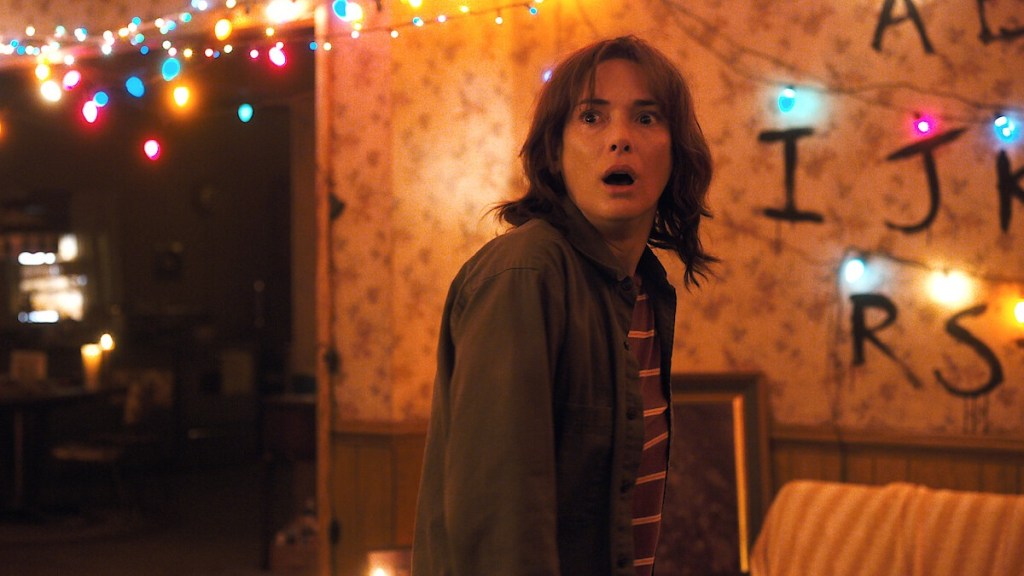
Within the first month of its release, Stranger Things was averaging 14 Million viewers a week; unheard of numbers for a streaming service and an audience that cable networks could only dream of.
Netflix’s use of its own aggressive algorithm to identify interested viewers certainly brought a lot of people to the series, but world of mouth brought many, many more.
Ten years later, its cast that literally no one had ever heard of is a collection of household names. Millie Bobby Brown, Sadie Sink, Finn Wolfhard, Noah Schnapp, Joe Keery, Caleb McLaughlin, and David Harbour are A-list movie stars with Emmy nominations, SAG Awards, music recording deals, Oscar buzz and social media followers in the hundreds of millions. In 2022, Kate Bush’s “Running Up that Hill” became the most streamed song of the entire year 37 years after its release in 1985 thanks to Stranger Things. Later that year, Metallica’s Master of Puppets had a similar resurgence because of its use in Stranger Things. Its cultural impact was boundless.
Perhaps Stranger Things’ most impressive feat is that in amassing such a huge crowd, it didn’t conform to a specific audience. It cast a very wide net. Children who grew up in both the 80s and 90s were attracted to it for its amazingly intricate nostalgia, and its brilliantly clever references to the deepest corners of the basement of their youth.
Actual 2016 adolescents were drawn to the fun young characters. It brought jocks and sci-fi fans to the yard.
And everybody was drawn to its original plot. A brand new storyline that seemingly cast a spell instantly on viewers who barely even know what they were getting themselves into. Stranger Things mania hit hard and it hit fast.
And it hit everyone…well…almost everyone.
Not my family… not at first, at least.
I watched the first episode with my wife. At the time we were brand spankin’ new parents deep in the throws of an incredible but barely-sleeping three month old. The concept of watching a story about a child being mysteriously ripped from his family in the middle of the night as his mother desperately searched for answers was a little tough for us to swallow; even if it was entrenched in references to ET and Back to the Future.
My wife was out. Hard out. Immediately. She never went back. It took me a long time to go back. But like everyone else I eventually came around to its irresistible attraction, and I fell in love with everything about it.
Stranger Things has never been the best thing on TV. But for the last decade it’s easily been one of the most comforting series. It’s fun. It’s easy to root for its characters. It’s warm-blanket filmmaking that everyone from 12 year old kids to 70 year old adults can shamelessly enjoy.
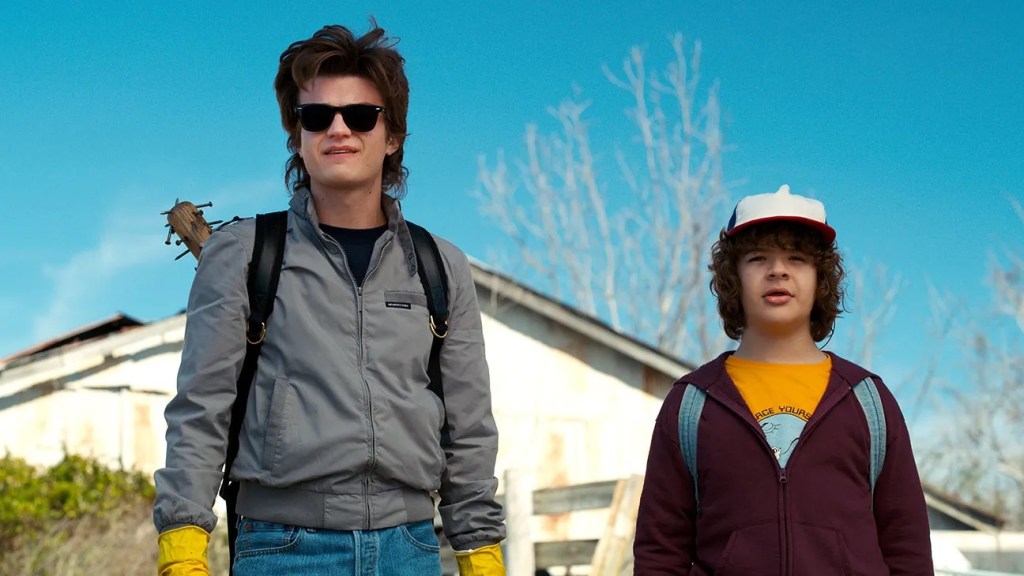
For all the things that made it great, there was one thing from the day it arrived that undoubtably set Stranger Things apart from nearly everything else ever on TV; you could binge the whole thing in one sitting from the comfort of your own home.
Stranger Things is probably the easiest spot on the map to pinpoint exactly where, when and how television consumption in United States changed forever.
We take for granted that nearly everything is bingable in 2025. But before Stranger Things that was a rarity.
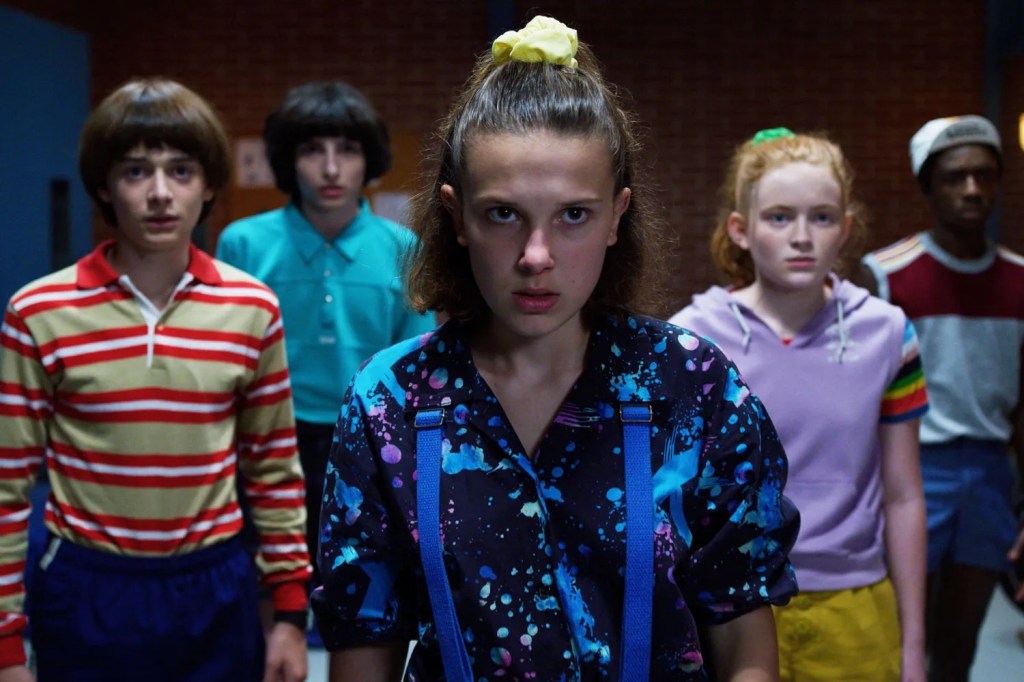
As every person of every age binged the crap out of Stranger Things in 2016, every studio on planet Earth scrambled to find the next addiction that audiences couldn’t get enough of. With that mad dash more Stranger Things also came fast. Season two dropped about a year after the initial offering to numbers exponentially larger than its debut. And very quickly other streaming services followed suit. Eventually, by the start of the new decade, as the world hunkered down for a long pandemic hibernation, this became the industry standard for how television series, film and even live events would now be delivered to homes across the world.
Stranger Things crawled so Tiger King, The Bear, Squid Game, Andor, Bridgerton and Wednesday could run.
And now the legendary end of Stranger Things’ runway is finally here.
I found myself getting pretty emotional as the last seven episodes of Stranger Things were slowly rolled out in batches over the last two months. Stranger Things isn’t just a television show. Every time it comes out it’s an epic event. Every season has been a treat for fans to receive and consume rabidly. The fact that it won’t ever happen again with this particular series is truly sad. I’m really going to miss it. But the fact that is ending is an important, good thing.
I’m a big advocate of finishing what you started. Last week when Marvel dropped a trailer for Avengers: Doomsday I tweeted that it may be a hot take, but I don’t want any more Avengers movies. The series should have ended with Endgame. It was the perfect ending, and for some reason filmmakers are losing sight of the fact that it’s very okay for their stories to have endings. In fact it’s highly encourage in storytelling to include…uh, an end to your story. Not everything successful needs to be an endless loop of content.
Months ago, as word of the final act of Stranger Things poked its head through the horizon, something wonderful started to happen. The rabid three-headed monster cult-following it birthed a decade ago began to loudly demand that the final episode be released in traditional movie theaters; an idea that couldn’t make Netflix and its CEO Ted Sarandos shudder more.
Netflix has spent a decade and half proudly gloating about how its sole mission in life is to take a bulldozer to the traditional theater-going experience one AMC at a time. If it were up to Netflix, every single multiplex in America would lock the doors tonight and never come back. But yet, Netflix’s worst nightmare was becoming a reality. The biggest fans of its most successful product overwhelmed the corporate giant and were clamoring for the last two and half hours of Stranger Things to get the theatrical release it deserves.

Netflix, rather predictably, instinctively told those fans to go straight to hell. But that just made the fans madder…and louder….and more unrelenting.
Even the Duffer Brothers who, at this point, were responsible for the producing most expensive television series ever made couldn’t deny that it would look, sound and feel incredible in a movie theater. And imagine experiencing those final moments in a crowded room with the craziest, most dedicated popcorn-chomping fans. It became evident pretty quickly that it wasn’t a matter of if it was a matter of when Netflix would cave to the demands and release Stranger Things’ finale in movie theaters across the country.
Netflix caved in October. It announced that Stranger Things’ finale would get its theatrical send-off; albeit in an extremely limited fashion. About 650 theaters across the United States would be allowed to show the 2.5 hour finale for twenty-four hours beginning at 8PM on New Years Eve (which would coincide with the home release).
The announcement was met with jubilation, and fans waited in anticipation for instructions on how to get a ticket.
I was one of them {humble brag}. Far removed from my initial disgust of its hard to swallow subject matter, and ten years deep into the snuggling stranglehold of its five seasons of charm, I couldn’t think of any other way I wanted to see Stranger Things off into television heaven than in a crowded movie theater.
I was lucky enough to get a single ticket for tomorrow’s showing in Warwick, RI, and I can’t wait to (hopefully spoiler free) experience something that will undoubtably be a once-in a-lifetime massive television viewing event on an epic scale.
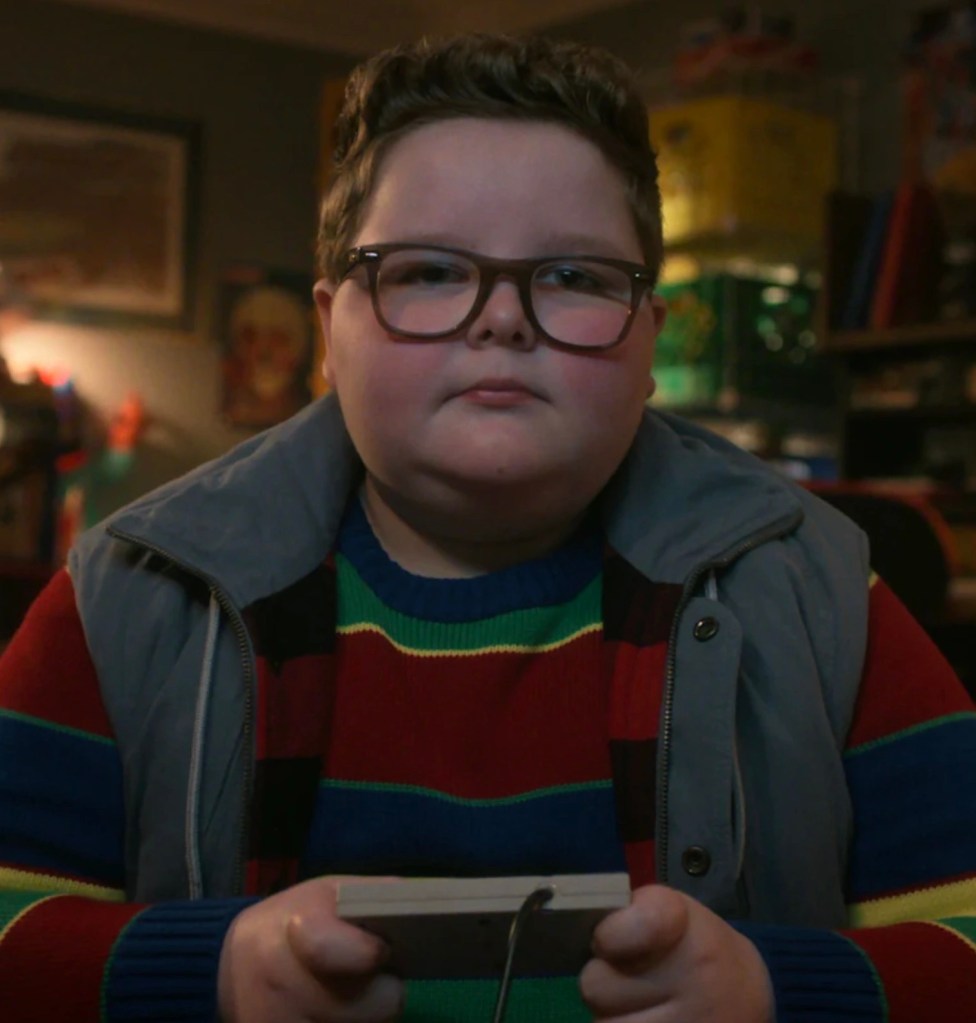
The irony of seeing Stranger Things’ finale in a movie theater can’t be ignored. After all, Stranger Things helped create the binge culture that may ultimately see the eventual demise of the traditional movie theater.
As a guy who has spent more time inside movie theaters than I could ever begin to recount, and an infinite number times more than that in front of my home TV, I think it’s a pretty monumental statement that the biggest fans of the biggest bingeworthy series ever still respect the theater-going experience so much that they felt the need to ensure Stranger Things got the proper send off it deserves.
So, adios Stranger Things. We shall never forget the irrefutable legacy you left us with.
…And so help me god if you fuckers kill Steve Harrington.
 Tube Notes with Ryan Benharris